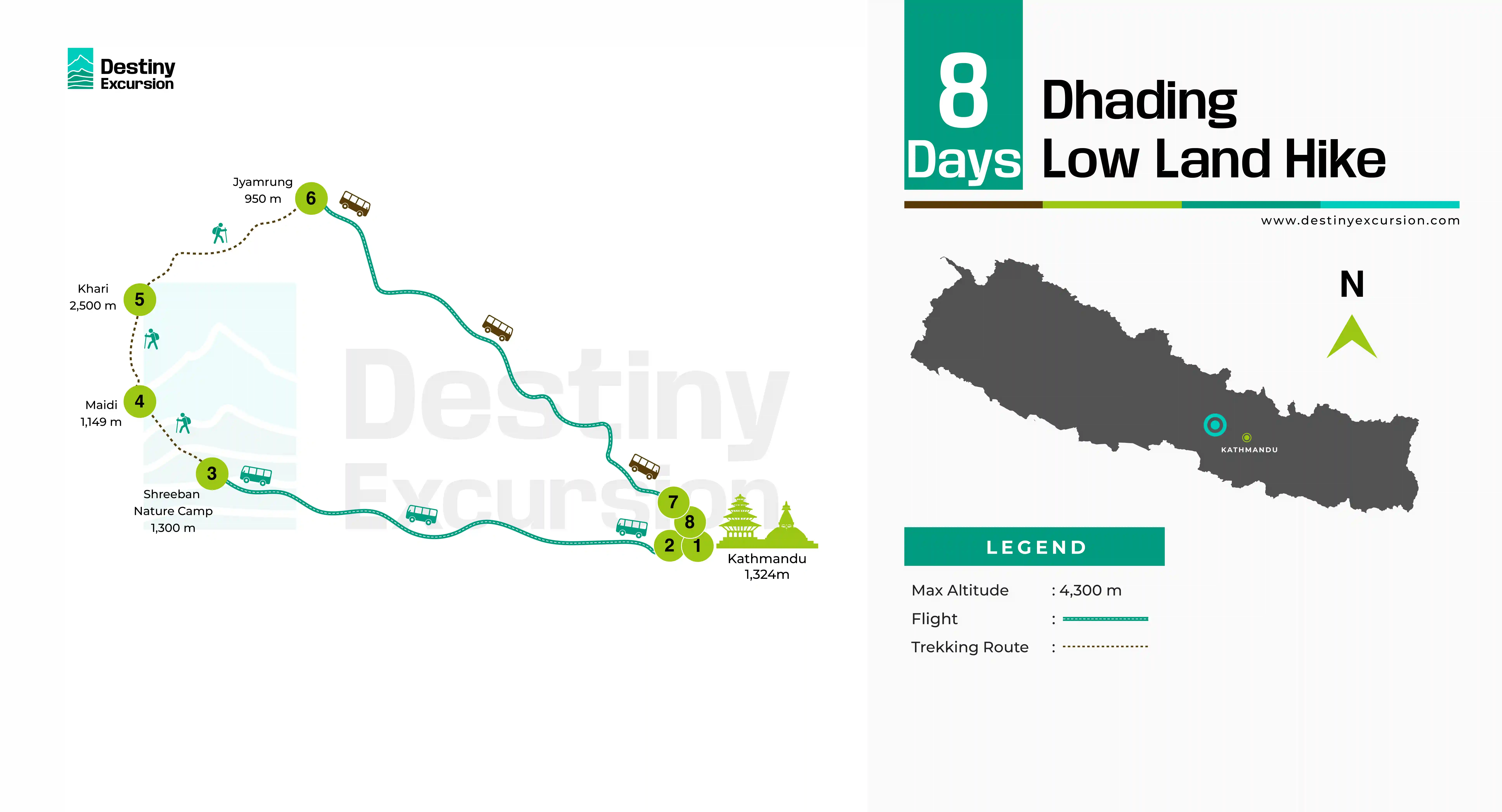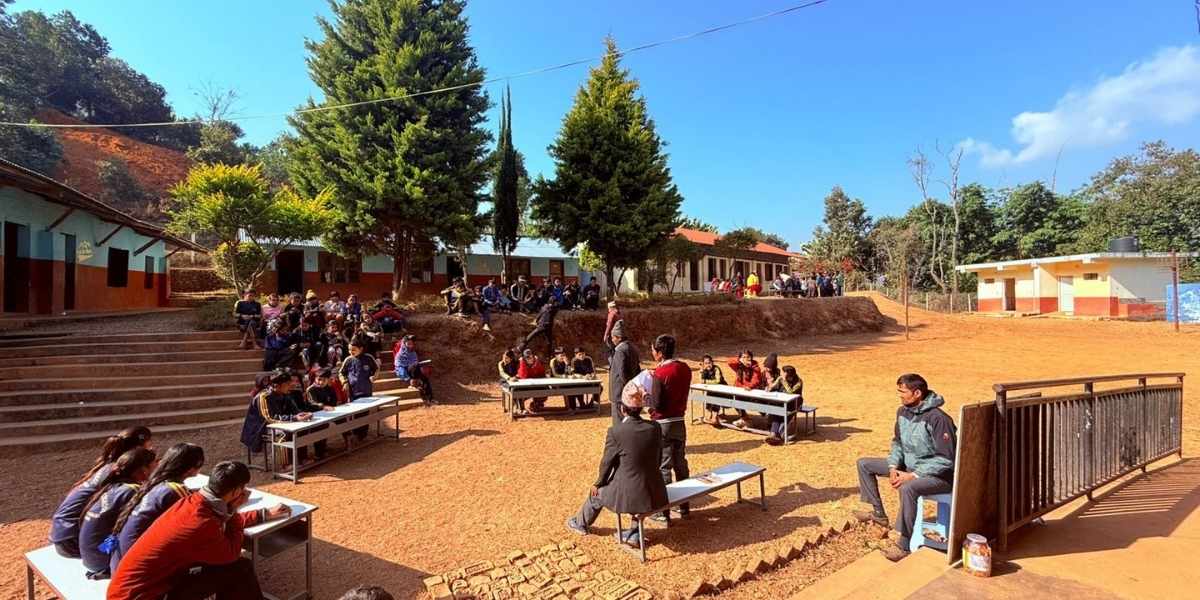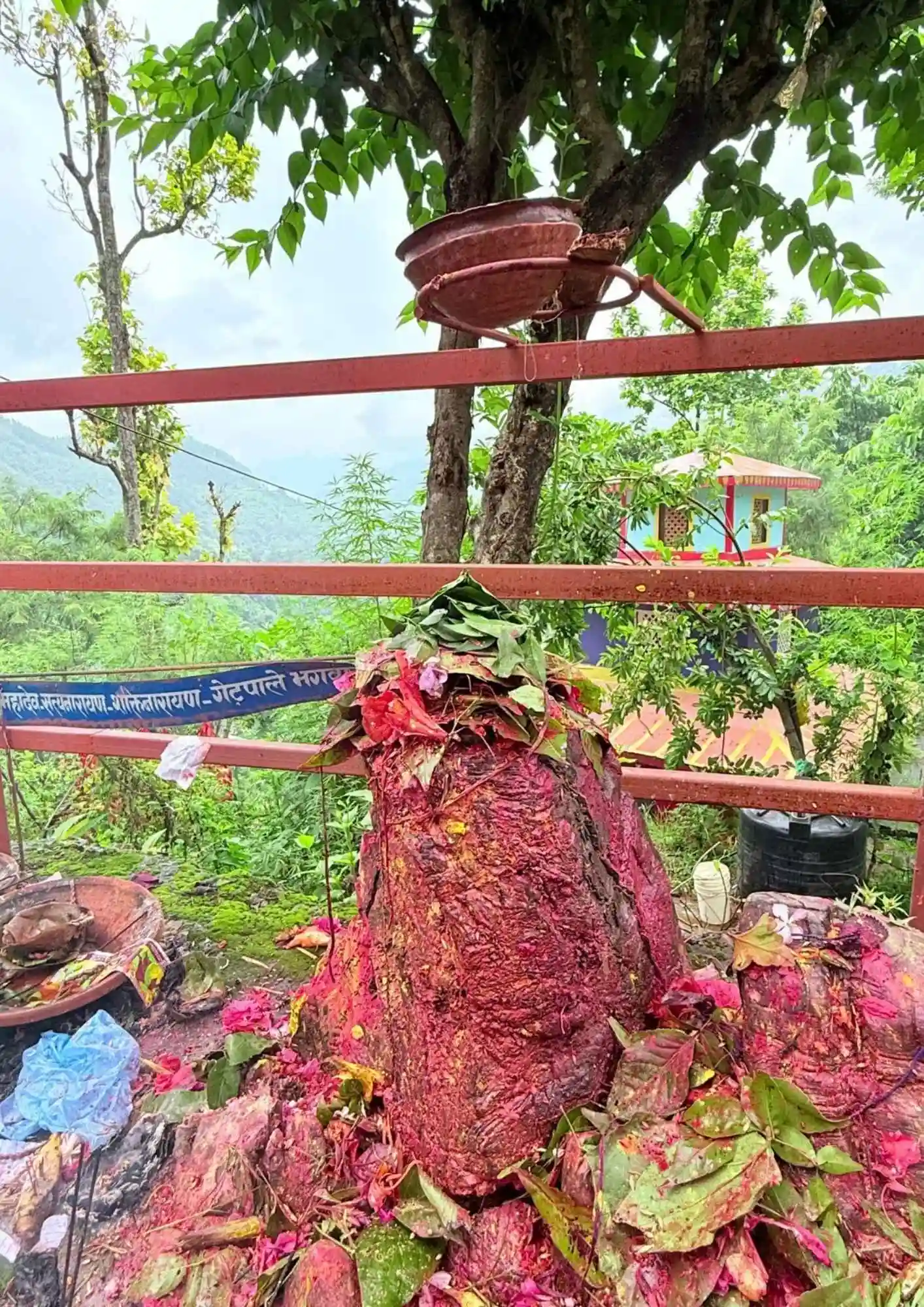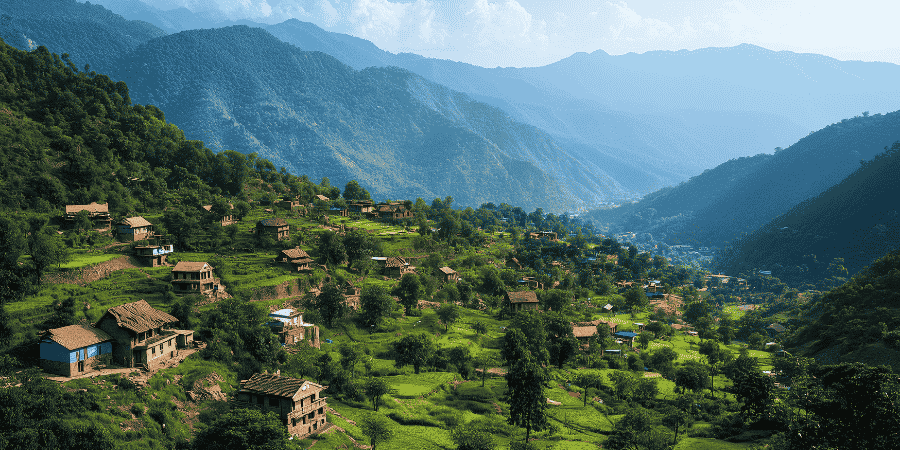


The Dhading Cultural Hike is one of the best hikes, rich in scenery and culture, you will not see elsewhere. This fulfilling experience plunges you into the remote hills of the Dhading district, with panoramic views of emerald green valleys and faraway white-covered tops while introducing you to Nepal's incredible cultural heritage. Five days of hiking and three days of cultural excursion and sightseeing comprise the experience that combines challenging trekking with high-energy, active interactions with village communities. Conducted by Destiny Excursion alone, this 8-day trip with 5 days of trek gives you an opportunity to get to feel an unspoiled side of Nepal where heritage and nature blend harmoniously.
Details
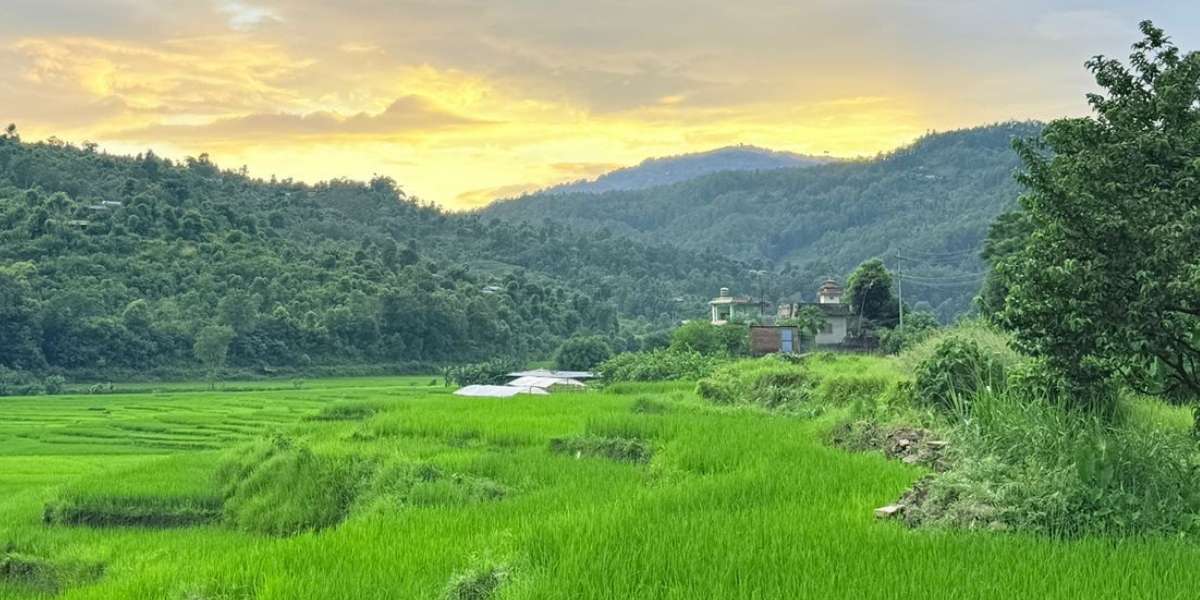
Your journey begins with a thrilling drive from Kathmandu into the heart of Dhading, a peaceful district that is surrounded by wooded ridges, terraced fields, and distant Himalayan mountains. With city traffic and din falling behind, the road twists into an arena of simplicity and charm, where village plainness, crystal rivers, and quiet woodlands occupy the horizon. The trail itself is very removed from tourist areas, so every experience and every trail has a sense of untamed, real, and unspoiled feel to it.
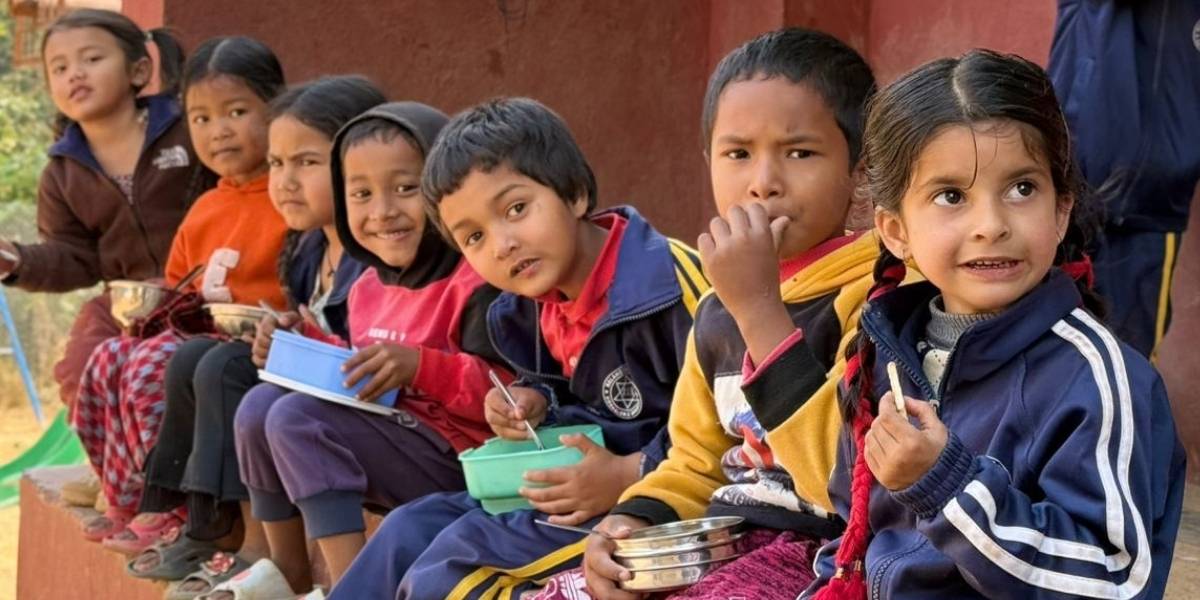
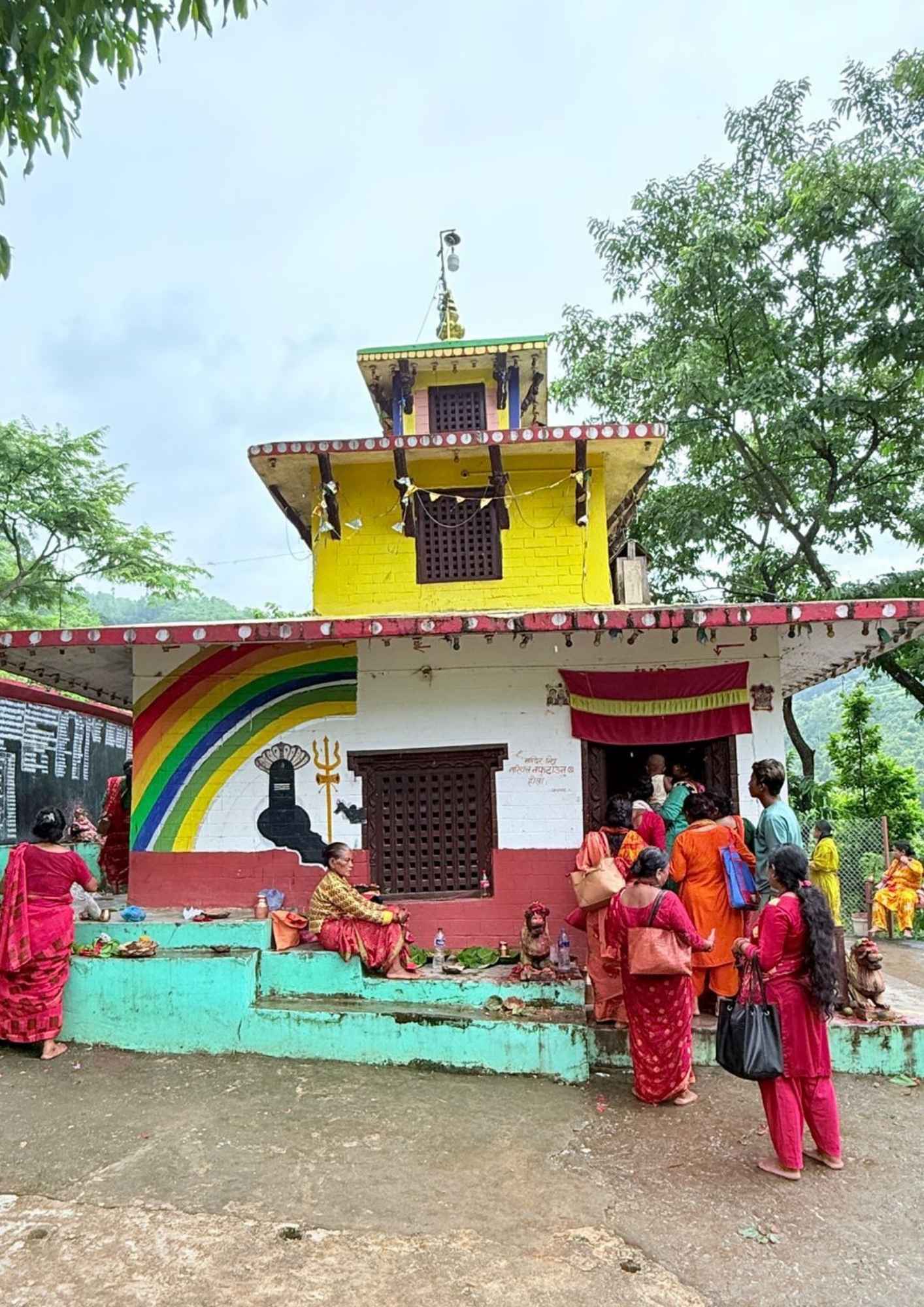
Throughout the trek, you'll pass through a region that is home to a thriving population of ethnic groups, primarily Tamang, Brahmin, and Chettri. They are the embodiment of centuries of shared cultural heritage and co-existence, and what they practice is open-hearted and sincere hospitality. You’ll be welcomed into village spaces where age-old customs are still a part of daily life, and you’ll have the rare chance to participate in local stories, traditional meals, and quiet moments of connection around evening campfires.
Unlike the majority of the high-altitude treks, the Dhading Cultural Hike also remains at a much more manageable altitude, making it more accessible to a greater range of trekkers, from families with children to seniors or newcomers. The trek is ideal to be done in spring, autumn, and winter when the weather is not severe, the sky is blue, and the trails are dry. Although the trek could be practically accomplished throughout the year, the monsoon months of June, July, and August should be avoided with torrential rains and slippery trails.