None

Bhutan

The Crane & The Tiger 7 days

  • Price From: $ 1866.00

Tour Overview

trip code

DE-005

Starting Point

Paro

End Point

Paro

Max Altitude

3,000m/ 9,845ft

Duration

7 days

country

Bhutan

Trip grade

Beginner

Activities

Cultural Tour

Best Season

Spring or Autumn

Embark on a captivating 7-day journey through Bhutan's heartland with "The Crane & The Tiger" tour, an immersive exploration of culture, spirituality, and natural beauty. This meticulously crafted itinerary unveils the diverse landscapes of Thimphu, Punakha, Gangtey, and Paro, offering a unique perspective on Bhutan's rich heritage and breathtaking scenery.

Your adventure begins in Thimphu, a capital city unlike any other, where modern life gracefully intertwines with ancient traditions. Explore iconic landmarks such as Buddha Dordenma, offering panoramic valley views, and the National Memorial Chorten, where you can observe locals engaging in their daily prayers. Discover Bhutan's unique biodiversity at the Motithang Takin Preserve, home to the national animal, the Takin. Immerse yourself in Bhutanese artistry at the Local Crafts Bazaar, showcasing hand-woven textiles, Thangkha paintings, and other traditional crafts.

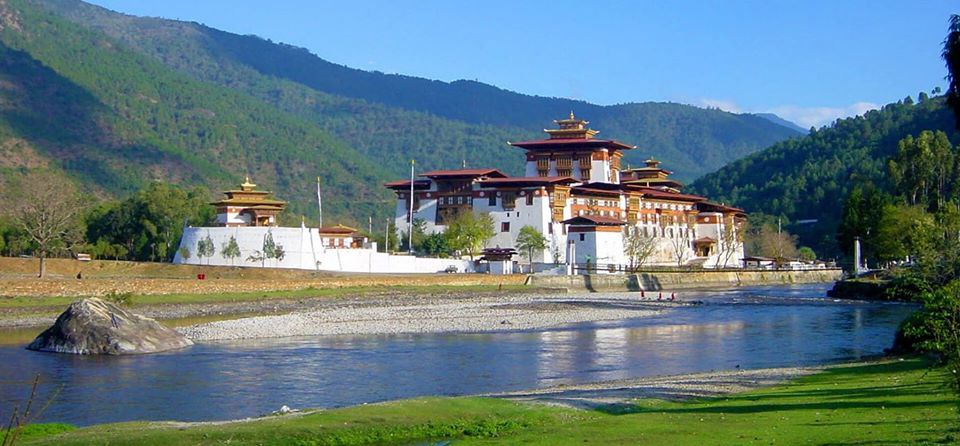
Journey eastward to Punakha, crossing the Dochula Pass, adorned with 108 memorial stupas and offering stunning Himalayan vistas. Explore Punakha Dzong, the "Palace of Great Happiness," strategically located at the confluence of two glacial rivers, and visit Chimi Lhakhang, the "Fertility Temple," reached via a scenic walk through rice paddies.

Continue to the glacial valley of Gangtey (Phobjikha), known for its vast, open landscapes and the 17th-century Gangtey Monastery. From late October to mid-March, witness the spectacle of Black-Necked Cranes, migrating from Tibet to this glacial sanctuary. A gentle hike along the Gangtey Nature Trail offers a serene experience amidst pine forests and the open valley floor.

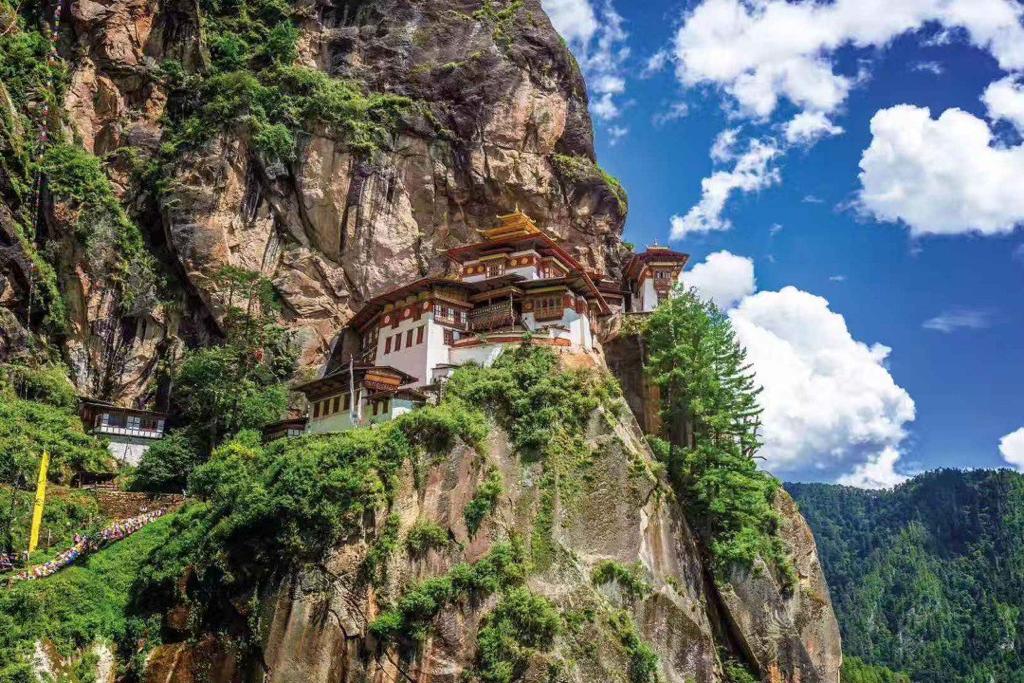
Conclude your journey in Paro, home to the legendary Tiger's Nest Monastery (Paro Taktsang), a highlight for many visitors. Explore Kyichu Lhakhang, one of Bhutan's oldest temples, and Rinpung Dzong, a massive fortress with intricate wall paintings depicting Buddhist lore. "The Crane & The Tiger" tour promises an unforgettable exploration of Bhutan's cultural and natural treasures.
Tour highlights

  • Explore the green valley of Gangtey.
  • Explore 4 Valleys under the blue sky and a green surrounding. 
  • Enjoy the evening view of TashichhoeDzong.
  • Visit Gangtey Goempa, the monastery of Nyingmapa school of Tibetan Buddhism
  • Explore the Local Crafts Bazaar to see different varieties of Traditional products

points of attraction

Thimphu: The Cultural Nexus
Your journey begins in the capital, where ancient rituals exist alongside a modernizing city.

  • Buddha Dordenma: Visit the massive golden Buddha overlooking the valley.
  • National Memorial Chorten: Observe the elderly performing their daily "kora" (prayers) around the stupa.
  • Motithang Takin Preserve: See the unique Takin, Bhutan’s national animal.

 Punakha: The Lowland Palace

Crossing the Dochula Pass (3,100m), you’ll see 108 memorial stupas and, on clear days, a panoramic view of the Himalayas. Descend into the warm, subtropical Punakha Valley.

  • Punakha Dzong: Known as the "Palace of Great Happiness," it is arguably the most beautiful fortress in the country, sitting at the confluence of two glacial rivers.
  • Chimi Lhakhang: A scenic walk through rice paddies leads to the "Fertility Temple" of the Divine Madman.

Gangtey (Phobjikha Valley): The Glacial Sanctuary

Drive further east into the Black Mountains to reach one of the most stunning spots in Bhutan—the wide, U-shaped glacial valley of Phobjikha.

  • Gangtey Monastery: A 17th-century Nyingma monastery that sits on a ridge overlooking the vast marshlands.
  • Black-Necked Cranes: If visiting between late October and mid-March, you can see these rare, sacred birds that migrate from Tibet.
  • Gangtey Nature Trail: An easy 2-hour hike that takes you through pine forests and across the open valley floor, offering a sense of immense peace.

Paro: The Final Pilgrimage

Return west to Paro for the grand finale of the trip.

  • Tiger’s Nest (Paro Taktsang): The legendary monastery perched on a vertical cliff. The 4–5 hour round-trip hike is the spiritual highlight for most visitors
  • .Kyichu Lhakhang: One of the two oldest temples in Bhutan (7th century), filled with ancient orange trees and a deep sense of history.
  • Rinpung Dzong: A massive fortress that houses the administrative and monastic offices of the Paro district.

Itinerary

Day 01: Arrive Paro by air & transfer to Thimphu (55 km / 1½ hrs drive)

The flight to Paro is one of the most spectacular in entire Himalayas. Flying along the Himalayan range from Kathmandu, the journey offers fascinating views and an exciting descent into the Kingdom. Bhutan’s first gift, as you disembark from the aircraft will be cool, clean fresh mountain air. After immigration formalities and baggage collection, you will be met by our representative, and afterwards drive to Thimphu, the capital town of Bhutan with enroute stop at Chuzom, the confluence of Thimphu and Paro rivers. Three different style of stupas; Tibetan, Nepalese and Bhutanese adorn this confluence. Shortly before reaching Chuzom, you will see on your left TschogangLhakhang, “the temple of the excellent horse”. It is a private temple, built in 15th century, as the result of visitation from Balaha, the excellent horse, a manifestation of Chenrezig, the compassionate Buddha.

On arrival in Thimphu, check into the hotel. The capital town of Bhutan and the centre of Government, religion and commerce, Thimphu is a unique city with unusual mixture of modern development alongside ancient traditions. With the population of about 90,000 it is perhaps still the world’s only capital city without a traffic light.

Evening an exploratory walk around Thimphu Main Street and market area. Also visit the Local Crafts Bazaar, to browse through example of Bhutan's fine traditional arts. Here you can buy hand-woven textiles, Thangkha paintings, masks, ceramics, slate and wood carvings, jewellery, interesting items made from local materials.

  • Overnight: Hotel in Thimphu
  • Meals: Lunch & Dinner

Day 02: Thimphu

After breakfast, sightseeing in Thimphu valley including visit to the following: The National Library, housing an extensive collection of priceless Buddhist manuscripts. Later visit Textile Museum, which provides insight into Bhutan’s one of the most distinct art form.

After lunch take a short drive (15 km) to Pangri Zampa, 16th century one of the oldest monasteries in Bhutan located just north of Thimphu. Here is a monastic school where Buddhist student’s monks learn Lamaism and astrology based on Buddhist philosophy.

Afterwards visit to Buddha Point (Kuensel Phodrang). Located at a short drive from Thimphu city centre, visitors can get a good overview of the Thimphu valley from the Buddha point (KuenselPhodrang). You can pay your obeisance and offer prayers to the Buddha, the largest statue in the country and then walk around and take a glimpse of the valley.

King's Memorial Chorten continuously circumambulated by people, murmuring mantras and spinning their prayer wheels. Construction of this landmark was the idea of Bhutan’s third king, His Majesty Jigme Dorji Wangchuk (“the father of modern Bhutan”) who has wished to erect monument to world peace and prosperity. Completed in 1974 after his untimely death, it serves both as a memorial to the Late King and as a monument to peace.

Later visit to Trashichhoedzong: This impressive fortress/monastery houses Secretariat building, the throne room of His Majesty, the King and various government offices. It is also the summer residence of Chief Abbot and central monk body.

  • Overnight: Hotel in Thimphu
  • Meals: Breakfast, Lunch & Dinner

Day 03: Thimphu - Gangtey (150 km / 05 hrs drive)

After breakfast, check-out from the hotel & drive Gangtey (Phobjikha) enroute visiting Dochula Pass (Altitude 3080m). In Bhutan, the passes are marked by a large Bhutanese Chorten and prayer flag. Dochula pass offers the most spectacular view over the high peaks of the eastern Himalayas on a clear day. And also via Wangdue Phodrang, where you can visit the local market and explore newly developed town. The district of Wangdue Phodrang is also famous for its bamboo products, slate and stone carvings. Further ahead pass through dense forests and oak, rhododendron tress, reaching at Gangtey (Phobjikha).

The valley of Gangtey is one of the most beautiful spots in Bhutan. The surprise of finding such a wide, flat valley without any trees after the hard climb through dense forests is augmented by an impression of vast space, and extremely rare experience in Bhutan where most of the valleys are tightly enclosed.

After lunch, take a walk around Gangtey village and visit Gangtey Goempa. Perched on a small hill that rises from the valley floor, the Gangtey Monastery is the only Nyingmapa monastery on the western side of the Black Mountain’s Gangtey valley, Bhutan and also the biggest Nyingmapa monastery in Bhutan. The Monastery is surrounded by a large village inhabited mainly by the families of the 140 Gomchens who take care of the Monastery.

  • Overnight: Hotel in Gangtey
  • Meals: Breakfast, Lunch & Dinner

Day 04: Gangtey – Punakha (75 km / 03 hrs drive)

After early breakfast, enjoy the Gangtey Nature Trail (Distance: 5.5 km, Time: approx. 2 hours, Difficulty level: Easy). 

This pleasurable walk provides opportunity to get nice feel of Phobjikha valley. From the small hilltop overlooking Gangtey Goemba, you head downhill through flower meadows to Semchubara village and from here through beautiful forests and into open valley. The trail ends at the local community school after passing a chorten and Khewal Lhakhang.

Later continue drive to Punakha, upon arrival; check into the hotel. Later visit Punakha Dzong, a massive structure built at the junction of two rivers. It was the capital of Bhutan until 1955, and still serves as the winter residence of the monk body.

  • Overnight: Hotel in Punakha
  • Meals: Breakfast, Lunch & Dinner

Day 05: Punakha – Paro (120 km / 4½ hrs drive approx.)

After breakfast, proceed to for short walking excursion to Chimi Lhakhang, from hotel it is about 15 mins’ drive till motor able road and then walk starts through paddy fields and villages. This is total about 1½ hrs walk, including both way). The Chimi Lhakhang, situated on a hillock in the centre of the valley, also known as the temple of fertility. It is widely believed that couples who do not have children and wanting one, if they pray at this temple, they are usually blessed with a child very soon. The trail leads across rice fields to the tiny settlement of Pana, meaning ‘field’. A walk through the village near the temple will give you rare glimpses into the daily life and lifestyle of the villagers.

Continue drive to Paro along scenic highway, enroute visit SimtokhaDzong, the oldest fortress of the country built in 1627 which now houses the School for Buddhist studies. 

On arrival in Paro, check into the hotel. After lunch, proceed to visit Ta Dzong, originally built as Watchtower, which now houses National Museum. The extensive collection includes antique Thangkha paintings, textiles, weapons &armour, household objects and a rich assortment of natural and historic artifacts.

Ta Dzong visit immediately followed by a short walk down the trail to visit Rinpung Dzong (ParoDzong), meaning (“fortress of the heap of jewels”), which has a long and fascinating history. Along the wooden galleries lining the inner courtyard are fine wall paintings illustrating Buddhist lore such as four friends, the old man of long life, the wheel of life, scenes from the life of Milarepa, Mount. Sumeru and other cosmic Mandala.

  • Overnight: Hotel in Paro
  • Meals: Breakfast, Lunch & Dinner

Day 06: Paro

After breakfast excursion to Taktshang Monastery or Tiger’s Nest (approx. 5 hours walk):  It is one of the most famous of Bhutan’s monasteries, perched on the side of a cliff 900m above the Paro valley floor. It is said that Guru Rinpoche arrived here on the back of a tigress and meditated at this monastery and hence it is called ‘Tiger’s Nest’. This site has been recognised as a most sacred place and visited by ShabdrungNgawangNamgyal in 1646 and now visited by all Bhutanese at least once in their lifetime. On 19 April, 1998, a fire severely damaged the main structure of building but now this Bhutanese jewel has been restored to its original splendour.

Afternoon drive to Drukgyel Dzong, a ruined fortress where Bhutanese warriors fought Tibetan invaders centuries ago. The snowy dome of sacred Chomolhari, "mountain of goddess'' can be seen in all her glory from the approach road to the Dzong.

Evening, visit the 7th century Kyichu Lhakhang, one of the 108 temples built in the Himalayas by Tibetan King, Songtsen Gampo. The building of this temple marks the introduction of Buddhism in Bhutan.

  • Overnight: Hotel in Paro
  • Meals: Breakfast, Lunch & Dinner

Day 07: Depart Paro by air

After early breakfast at the hotel, drive to the airport for flight to your onward destination. Our representative will help you with exit formalities and then bid you farewell.

  • Meals: Breakfast

What's included

  • Daily Government Royalties and Taxes ($100 per person per night)
  • Entrance Fees/Monuments Fee
  • All transfers vehicle and sightseeing as per itinerary
  • English-speaking accompanying guide
  • Accommodation as per below - 3 stars mentioned hotels
  • Breakfast & dinner at the hotel and lunch at the local tourist restaurant
  • 1 Bottle of water per day during the tour


Destination - 3 Hotel Envisaged: Name of Hotels

Thimphu:   Hotel Drukgyel Twin / Hotel Central / Hotel Migmar / Hotel Lemon Tree
Punakha:   Hotel Lobesa / Punatshangchu Cottage / Zen Punakha
Gangtey:   Yangkhil Lodge / Phobjikha Resort / Gakiling Guest House
Paro:         Tenzinling Resort / Gonju Boutique / Dema  Resort / Metta Resort / Hotel Treenz Lite

What's excluded

  • Bhutan visa fee is US$50 (fast track)
  • Beverages (alcoholic/non-alcoholic)
  • Expenses of personal nature (like tipping, laundry, telephone/fax calls, camera/video fees, etc.)
  • Insurance of any kind/medical expenses
  • Air Ticket