Somewhere between the second ascent of a steep trail and a morning yoga session at 3,000 metres, something shifts. You stop thinking about home. You stop tracking your phone. The rhythm of breath, footfall, and altitude takes over, and Nepal does what it has always done: it strips things down to what matters.
Nepal has long drawn people seeking more than scenery. Pilgrims have walked these trails for centuries. Buddhist monks have meditated in these mountains since before any trail map existed. What is newer is the traveler who comes for both: the physical challenge of trekking and the interior quietness of a structured practice. Nepal spiritual tours now bridge these two traditions in a single journey.
What Nepal spiritual tourism actually covers
There are broadly three types.
Pilgrimage and temple circuits visit the major religious sites: Pashupatinath, the Hindu cremation temple on the Bagmati River; Boudhanath, the largest Buddhist stupa in Asia; Swayambhunath, the Monkey Temple overlooking Kathmandu; and Lumbini, where Siddhartha Gautama was born. These tours move between sacred landmarks and include guided prayer, monastery interaction, and cultural context from a licensed guide.
Monastery retreats are longer stays in active Buddhist monasteries like Namo Buddha or Kopan. Participants join the daily schedule of monks: early morning prayers, meditation sessions, communal meals. Some monasteries open their doors to visitors seeking a few days or weeks of practice.
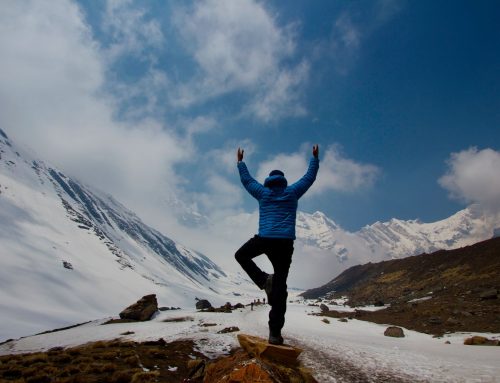
Yoga treks are the third type, and the most distinct. They are not yoga retreats that happen to include a walk. They are full trekking journeys where yoga and meditation are woven into each day: a session before the morning’s ascent, stretching after descent, breathwork to help with altitude. The landscape is not a backdrop. It is part of the practice.
The yoga trek difference
Destiny Excursion’s Yoga Trek program has been part of the company’s offering since founder Hari Dharel first recognised that many of his clients were seeking something beyond the physical objective of a summit view. With over 35 years in Himalayan tourism and a background as former General Secretary of TAAN, Dharel built the Yoga Trek as a departure from standard itinerary design: rather than moving as fast as altitude allows, the program moves at the pace the practice requires.
Each morning begins with a session before breakfast. The practice is calibrated to altitude and the previous day’s exertion. At lower elevations, it might be a full Hatha sequence. At 3,500 metres, it might be twenty minutes of pranayama and restorative poses. The goal is not performance. Acclimatisation, both physical and psychological, is.
TripAdvisor reviewers who have completed yoga trek programs consistently note that the daily practice changes something by day three or four. One participant told us the breathing techniques she learned on day two altered her entire approach to the high-altitude crossing that followed: rather than pushing through shortness of breath, she worked with it. Moving from endurance to attention, she called it.
The routes most suited to this format are the Annapurna Sanctuary, Poon Hill, and Manaslu Circuit. Each offers the right combination of gradual altitude gain, manageable daily distance, and teahouse infrastructure where group sessions can happen with some shelter and space.
Sacred sites along the route
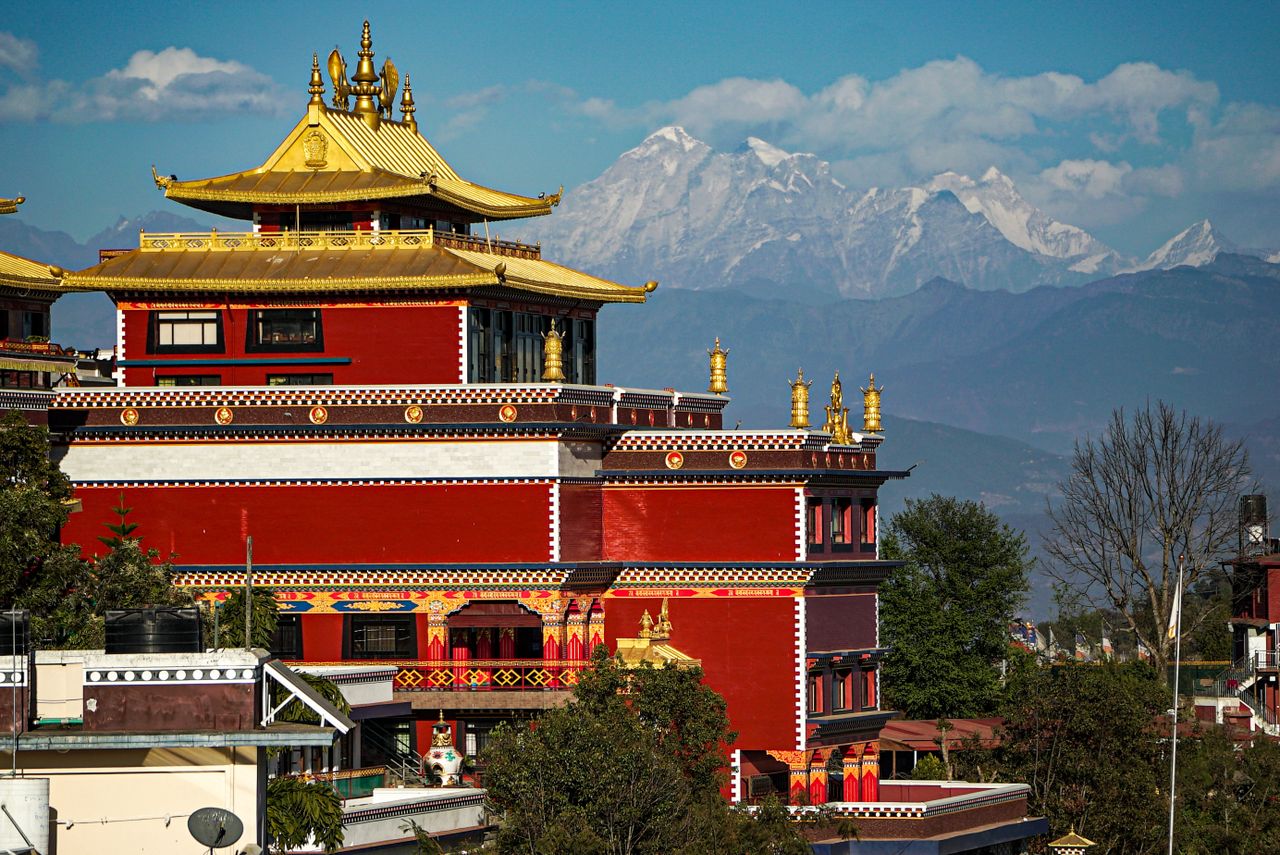
Nepal’s trekking routes are not separate from its religious landscape. They move through it. Monasteries appear at intervals along most major trails, some centuries old, active with monks who continue to live and practice there regardless of tourism.
The monastery at Tengboche on the Everest trail sits at 3,867 metres and holds one of the most significant Mani Rimdu festivals in the Himalayan calendar. At Muktinath in the Mustang region, Hindu and Buddhist traditions overlap at a single temple site, drawing pilgrims from both traditions. In the Manaslu region, villages like Samagaun carry a Tibetan cultural influence unchanged by the development that has touched lower valleys.
A well structured spiritual tour includes time at these places that goes beyond photography. A guide who can introduce you to the resident lama, explain the iconography in a prayer room, or arrange for you to sit in on a morning puja changes the visit entirely.
What to prepare for
Nepal spiritual tours require the same physical preparation as any trekking itinerary of comparable length and altitude. The yoga component is not a substitute for fitness. It is a complement to it. Trekkers who arrive in good cardiovascular condition get significantly more from the practice, because they are not spending all their energy managing exertion.
The emotional preparation is less often discussed. Several days without reliable connectivity, in basic teahouse accommodation, moving at a slower pace than usual, can feel uncomfortable before it feels clarifying. Retreats and treks that work best are those where participants arrive with some flexibility about what the experience will look like, rather than a fixed expectation of insight.
Altitude should be taken seriously regardless of the spiritual framing of the journey. Acclimatisation days are built into the itinerary for good reason. Diamox is available but is not a replacement for a proper ascent pace. Any responsible operator includes altitude monitoring as a standard part of the program.
Choosing the right Nepal spiritual tour
When comparing programs, ask specifically: who leads the practice sessions, what is their training background, how are sessions adapted for altitude and group fitness levels, and what happens if a participant needs to descend early.
A trekking company led by someone with genuine roots in the tradition will give you different answers than one that has added a yoga module to an existing catalogue. Hari Dharel’s 35-year background in Nepalese tourism is relevant not because of the number, but because of what it represents: a guide who has watched travelers come to Nepal for the view and leave having found something they were not specifically looking for.
That is what Nepal has always offered. The yoga trek simply structures the search.
Practical information
Best seasons: March to May and October to November.
Duration: 7 to 16 days depending on route and program type.
Fitness requirement: Moderate. Comfortable with 5-6 hours of walking per day at altitude.
What to pack: Lightweight travel yoga mat, warm layers for early morning sessions, trekking poles.
Altitude range by route: Poon Hill 3,210m. Annapurna Sanctuary 4,130m. Manaslu Circuit 5,106m at Larkya La.